
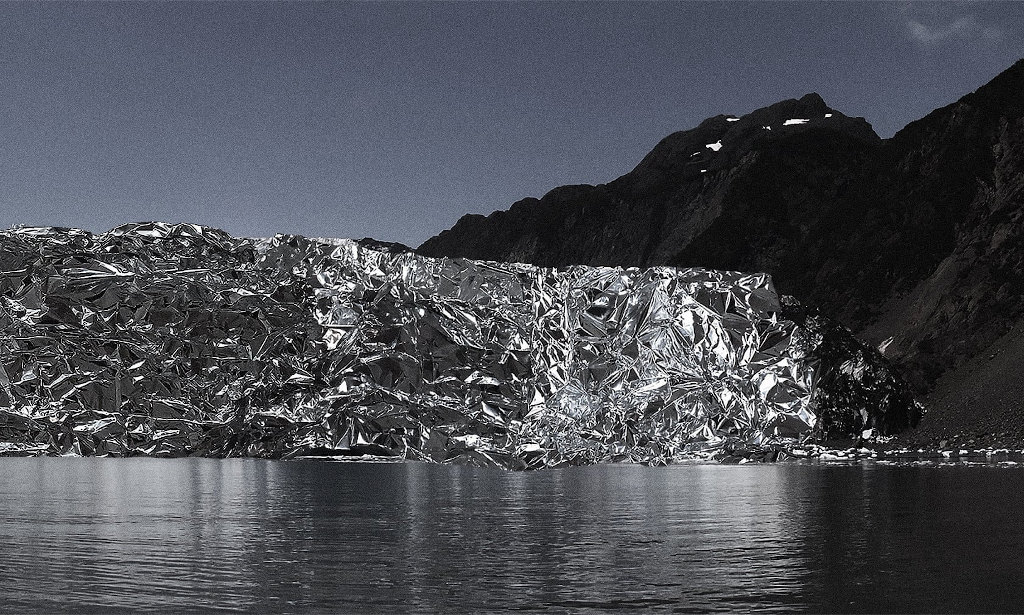
In 1975, photographer Michel Comte stood up before scientists, business leaders and politicians at the Club of Rome to deliver a speech about the climate disaster he believed was on the horizon. Back then, he was still a student, and a little nervous – but he could sense the future. Now, Comte’s recent works incorporating black carbon fallout from the jet stream, shown in Rome, Milan and Hong Kong, prove just how right he was to speak out.
Comte’s message was echoed last week in the UK, when thousands of schoolchildren – inspired by 16-year-old climate activist Greta Thunberg – took to the streets to pressure the government into taking action on climate change. Like Comte, they have seen a bleak future ahead and are speaking out.
Sadly, that hasn’t been the case for most artistic and cultural institutions, which have spent the last few decades responding to climate change with little more than silence. They have been dangerously complicit in desensitising society to what’s really at stake.
It hasn’t always been this way. In the mid-90s, when a post-Chernobyl generation made its voice heard, the ecological protest movement was nurtured by critical theatre, radical art shows, public debate and avant garde music. Then something changed. In response to the backlash against fossil fuels, major energy suppliers became involved with arts sponsorship. This was no harmless philanthropy. Parallel to the rise of the blockbuster exhibition the importance of Shell and BP to the artistic budget of arts centres grew, to a point where many major national institutions were on the payroll of the fossil fuel giants. Some still are today.
But even for those who have freed themselves of it (or exchanged them for carmakers), the damage to a generation has been done. For decades arts institutions have effectively engaged in self-censorship to pay for their productions, putting on amazing programming and covering critical topics, as long as it wasn’t a thorough debate of our addiction to fossil fuels. This strategic exclusion of a topic from public debate over more than a generation has led to ignorance, with repercussions in education, academic and public life.
But there is hope in the air. Tate Modern have an Olafur Eliasson retrospective scheduled for this summer – his Ice Watch project was recently invited to melt away outside the museum, with the carbon impact of each block accounted for. As for Comte, he is about to board a sailing boat for a challenging passage to the Arctic, creating a monumental light installation calling for us to change our ways before it’s too late. If we allow more artists such as these to become part of the conversation, we will have a culture fit for the generation of children who took to our streets.
Recent Comments